
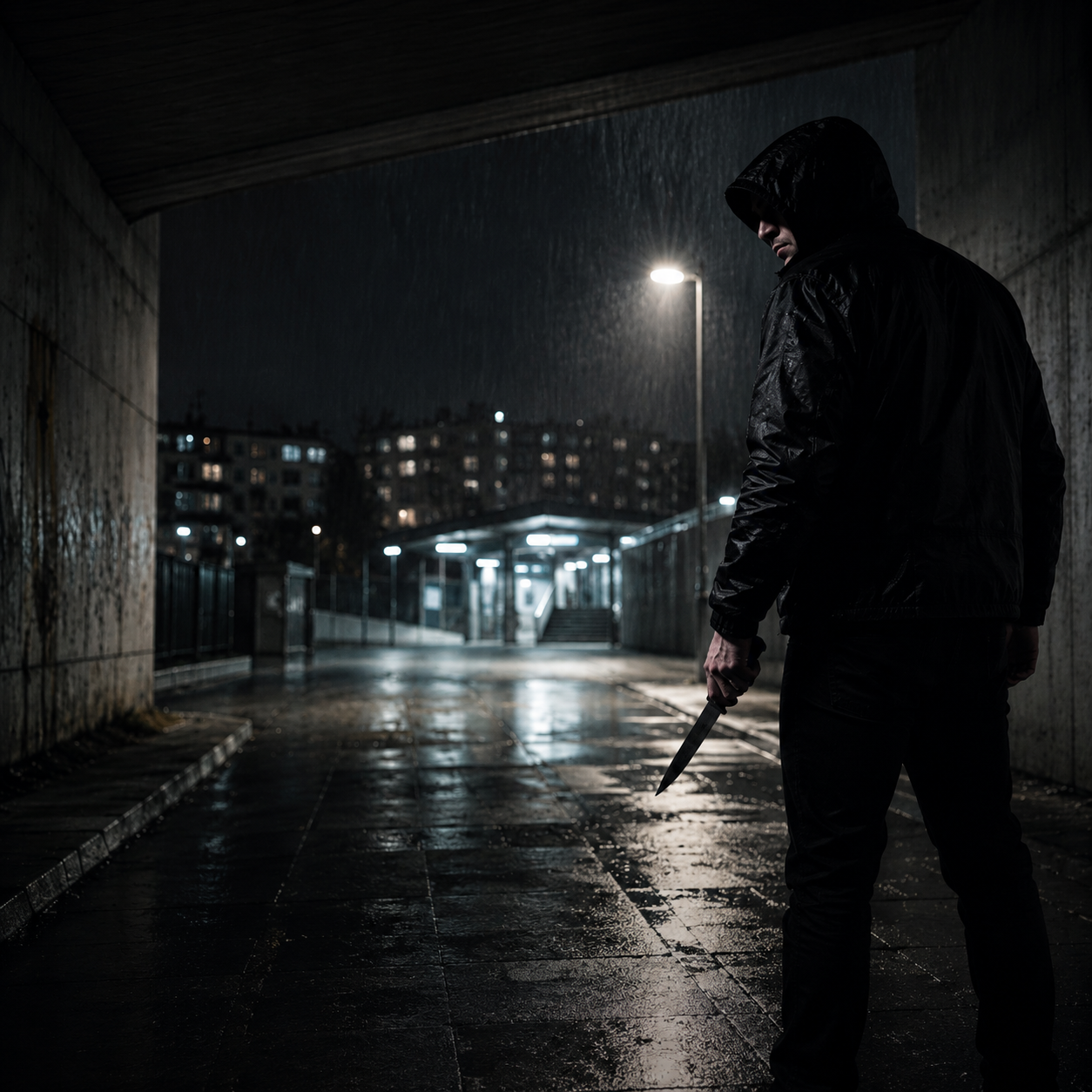
Knife Crime in Germany: Knife Bans as a Stopgap Solution
A train station. A city festival. A park. A regional train.
Places that sound like everyday life.
Like the way home. Like the weekend. Like a children's group. Like people on the move, not expecting violence.
And yet, precisely such places have become crime scenes in recent years. Brokstedt. Duisburg. Mannheim. Solingen. Aschaffenburg.
Names of cities that have burned themselves into the collective sense of security.
After every act, the same ritual follows: horror, candles, press conferences, political demands. Then comes the word that now almost automatically falls.
Knife ban.
It sounds like action. Like control. Like a quick answer to a brutal development.
But is it really the right answer?
INNARA says: No.
The knife is not the actual problem.
The problem is the person willing to use it against others.
And in several of the most shocking cases of recent years, this question leads to another uncomfortable point that is too often only half-discussed:
Knife crime in Germany is also a problem of failed migration policy.
Knife crime in Germany: The cases that changed the country
On January 25, 2023, a stateless Palestinian randomly stabbed passengers on a regional train in Brokstedt near Hamburg. Two young people died, several were seriously injured. The perpetrator was later sentenced to life imprisonment.
In April 2023, a Syrian perpetrator attacked people with a knife in Duisburg, first in the city center and later in a gym. One man died, and other victims were critically injured. The Düsseldorf Higher Regional Court later spoke of Islamist knife attacks.
On May 31, 2024, a police officer was fatally injured in a knife attack at the Mannheim market square. Other people were also injured. The Afghan perpetrator Sulaiman A. was later sentenced to life imprisonment for an Islamist-motivated attack.
On August 23, 2024, the Solingen city festival became a crime scene. A Syrian treacherously stabbed people. Three people died, and others were injured. The Attorney General later filed charges for triple murder, ten counts of attempted murder, and membership in a terrorist organization abroad.
In January 2025, an Afghan attacked a group of children in Schöntal Park in Aschaffenburg. Two people died, including a two-year-old child and a man who tried to help. Other people were injured.
These are not abstract statistics.
These are images, places, news, names.
And they explain why many people feel that something has changed in public spaces.
29,243 knife attacks: The number behind the feeling
According to police crime statistics, a total of 29,243 knife attacks were recorded in Germany in 2025.
This amounts to approximately 80 knife attacks per day.
Every day.
This is not about merely carrying a knife. The statistics record cases in which a knife is directly threatened or used against a person.
This is crucial.
It's not about kitchen knives in drawers.
Not about tools for trade.
Not about knives while camping.
Not about objects that are peacefully used millions of times.
It's about the moment when a person decides to turn a knife into a threat.
The uncomfortable connection: Migration, violence, and government failure
One cannot speak honestly about knife crime in Germany without speaking about migration.
Not because every migrant is dangerous.
But because several of the most brutal and media-dominating knife attacks of recent years were committed by perpetrators or suspects with a refugee, asylum, or migration background.
Brokstedt.
Duisburg.
Mannheim.
Solingen.
Aschaffenburg.
In some cases, it was about Islamism.
In some, about psychological abnormalities.
In some, about failed deportations.
In some, about people who were already known to the state.
But that's precisely the point:
If a perpetrator has already attracted attention, if they should have been deported, if radicalization is a possibility, or if authorities do not intervene in time, then this is no longer a debate about blade lengths.
Then it is a debate about internal security.
About migration.
About control.
About integration.
About deportation.
About Islamism.
About government failure.
About responsibility.
And about the question of why citizens hear after every incident that everything will now be investigated.
The political reflex: Prohibit, tighten, control
After Solingen, the security package came.
More knife bans at public events. More opportunities for checks. Further tightening of weapons law. Again, the attempt to regain a sense of security through new rules.
This is politically understandable.
After such acts, the public expects answers. Nobody wants to hear that a state appears helpless.
But this is precisely where the problem begins.
A ban first affects those who already adhere to rules.
The cook.
The craftsman.
The angler.
The camper.
The citizen who understands a pocket knife as a tool.
The perpetrator, who is ready to attack a person, has long since crossed the decisive line. They don't just cross the weapons law. They cross the line into violence.
Anyone who believes that a person willing to commit murder or grievous bodily harm will turn back out of respect for a no-knife zone is making it too easy for themselves.
Knives are not the problem. Perpetrators are the problem.
This is where INNARA consciously thinks differently.
A knife is a tool.
In the kitchen.
At work.
In the workshop.
In agriculture.
In emergency services.
When camping.
In everyday life.
It becomes dangerous when a person misuses it.
Therefore, INNARA explicitly rejects blanket knife bans and symbolic legislative tightening as a simple answer to a complex problem of violence.
Not because security is unimportant.
But because security is too important to reduce it to objects.
The real question is not: How many objects can we ban?
The real question is: Why do people attack other people? Why aren't dangerous individuals stopped sooner? Why aren't criminals consistently deported? Why do prevention, control, care, law enforcement, or accommodation fail where they should be effective?
These are uncomfortable questions.
But they are more honest than the next debate about blade lengths.
People's fear is real
One does not have to artificially inflate the crime debate to realize: many people are afraid.
They observe more.
They look around at the platform.
They cross the street at night.
They send a message when they arrive home.
They avoid certain places.
This fear is not irrational.
It arises from news, incidents, videos, stories, from a new insecurity in public spaces.
Not every place is dangerous. Not every path becomes a risk. But the old sense of normalcy is damaged for many.
And anyone who tells people to just not be so sensitive has not understood the problem.
People don't want to dramatize.
They want to feel safe.
Between panic and looking away, there is a third way
The debate about knife crime often slips into two extremes.
Some downplay it.
Others demand the next ban.
INNARA stands for a third way.
Look closely.
Clearly name perpetrators.
Do not trivialize violence.
Do not ignore migration.
Do not soften Islamism.
Do not hide government failure behind empty phrases.
Do not sell blanket knife bans as a solution.
And at the same time, do not leave people alone with their need for security.
Because a bitter truth remains:
The state often only intervenes after the fact. Knife attacks happen quickly, and the police cannot be everywhere at the same time.
Not in every train compartment.
Not at every platform.
Not in every park.
Not on every way home.
Not every second.
Therefore, personal responsibility and self-protection are more important than ever.
Security must become a given.
INNARA was born from this aspiration
INNARA was not born from a product idea.
You see news differently. You think of family, partners, children, friends. Of people who are out and about when you can't be there yourself.
You realize: security is not a given.
And at the same time, you realize: the protective solutions that exist hardly fit into everyday life.
A stab-resistant vest might protect the torso, but not the arms and neck. Besides, you also look like you're wearing a protective vest.
So who wears it to work in the morning? Who puts it on when they go shopping? Who sits in a cafe with it? Who wants to look like they're expecting a confrontation on the train?
Classic protective clothing is visible, heavy, tactical, and requires explanation.
At best, it protects.
But it doesn't fit into most people's lives.
Precisely from this gap, INNARA was born.
Protection that doesn't look like fear
The basic question was simple:
What if protective clothing no longer had to look like protective clothing?
What if protection doesn't stand out?
Doesn't provoke?
Doesn't need explanation?
Doesn't look like a tactical vest?
But like a jacket.
Like clothes you'd wear anyway.
From this idea, Urban Protective Fashion was born: fashion that fits into everyday life and can do more at the same time.
Not as a weapon.
Not as an attack.
Not as a symbol of fear.
But as silent preparation.
Like a seatbelt.
Like an airbag.
Like a smoke detector.
Nobody uses these things because they expect an emergency.
You use them because an emergency doesn't ask if you're ready.
Why INNARA does not want to sell fear
Fear is a powerful sales tool.
One could exploit it. One could dramatize every incident to the maximum. One could make people believe they are lost without protection.
Precisely that is not INNARA's aspiration.
INNARA takes fear seriously, without misusing it.
That is a difference.
People know themselves what they feel. They don't need panic. They don't need martial equipment. They don't need a brand that talks down the world to them worse than it is.
They need honest products for a reality that has changed.
INNARA therefore does not stand for retreat.
But for attitude.
For people who want to continue moving through the world. Not naively. Not fearfully. But prepared.
NERO: A jacket as an answer to a societal gap
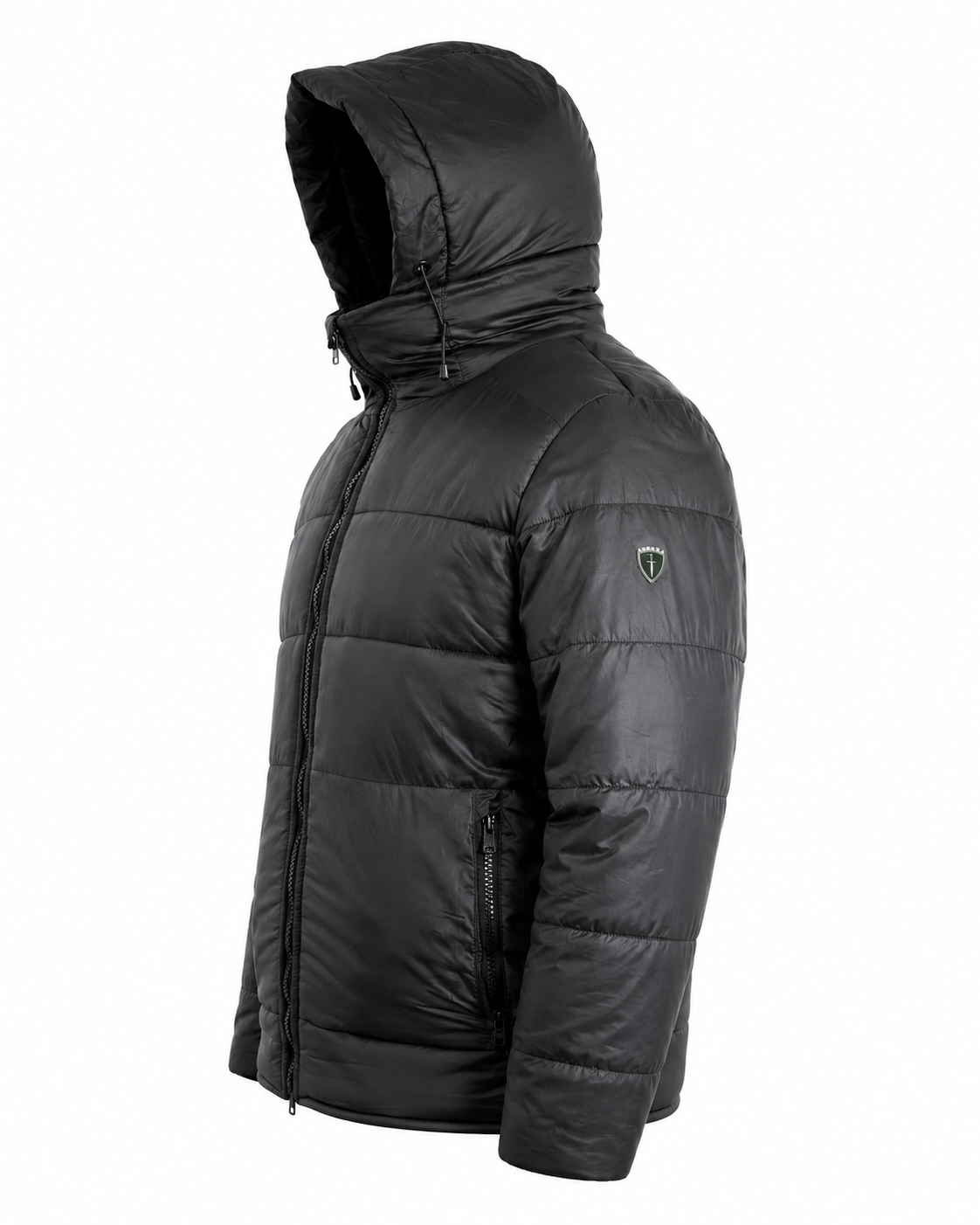
NERO is INNARA's first jacket. It shows that protective clothing doesn't necessarily have to look like protective clothing.
From the outside, NERO looks like a minimalist premium puffer jacket: urban, simple, wearable. Inside, there is a multi-layered protection system. The tested main protection areas include central zones such as the torso, hood, collar, and neck area. The sleeves are additionally designed to be cut-resistant.
The crucial aspect is not just the technical function.
The crucial aspect is the idea behind it:
Protection must become part of everyday life if it is to be effective in everyday life.
A product that stays at home protects no one.
What remains after the headlines?
After Brokstedt, the question of safety on the train remained.
After Duisburg, the question remained how a normal place can suddenly become a crime scene.
After Mannheim, the grief for a police officer who never came home remained.
After Solingen, a city festival remained that no one will remember as just a city festival anymore.
After Aschaffenburg, the image of a park remained where even a group of children was not safe.
These cases do not represent every day in Germany.
But they stand for a new vulnerability.
And that is precisely why it is not enough to talk only about knives after every incident.
One must talk about perpetrators.
About violence.
About migration.
About Islamism.
About failed deportations.
About dangerous individuals who are stopped too late.
And about the question of how people can move more safely in everyday life again, without hiding.
Conclusion: The debate must become more honest
Knife crime in Germany is a reality.
29,243 knife attacks in 2025.
Approximately 80 per day.
The fear of many people is not imagined. It is a reaction to a development that has become visible.
But the answer cannot be too simple.
Not every knife is a problem.
The perpetrator is the problem.
Violence is the problem.
Problematic migration is part of the problem.
Islamist radicalization is part of the problem.
Government failure is part of the problem.
The failure to stop dangerous people in time is part of the problem.
INNARA therefore clearly positions itself against blanket knife bans as symbolic politics. Security does not arise from demonizing tools. Security arises from responsibility, consistency, prevention, clear boundaries – and from solutions that people can truly use in everyday life.
INNARA was founded because protective clothing needed to be rethought.
Not loud.
Not tactical.
Not visibly fearful.
But stylish, integrated, and wearable.
For people who don't want to stop moving freely.
But also no longer want to pretend that nothing has changed.
Style. Safe. INNARA.
Read more
NERO is INNARA's stab-resistant premium puffer jacket – designed for people who want to feel safer in their everyday lives without sacrificing style. TÜV-certified, Made in EU, and made for a new r...
Seit dem Sicherheitspaket vom Oktober 2024 wächst die Zahl der Waffen- und Messerverbotszonen in Deutschland stetig – inzwischen gilt in acht Bundesländern ein landesweites Messerverbot im ÖPNV. Do...
